

Adjustable beds are not replacing traditional bed frames overnight, but they are steadily becoming the default choice for anyone serious about sleep quality, spinal health, or managing conditions like snoring and sleep apnea. As awareness grows and prices become more accessible, the adjustable bed is shifting from a “medical accessory” to a mainstream lifestyle upgrade, much like memory foam did two decades ago.
The Base Question Is Traditional Bed Frame Still Enough?
For most of human history, a bed simply meant a flat, static surface. That worked reasonably well when we didn’t know as much about sleep science as we do today. But research over the last 20 years has made one thing clear: a flat sleeping position isn’t optimal for everyone, and for a growing number of people, it’s actively working against them.
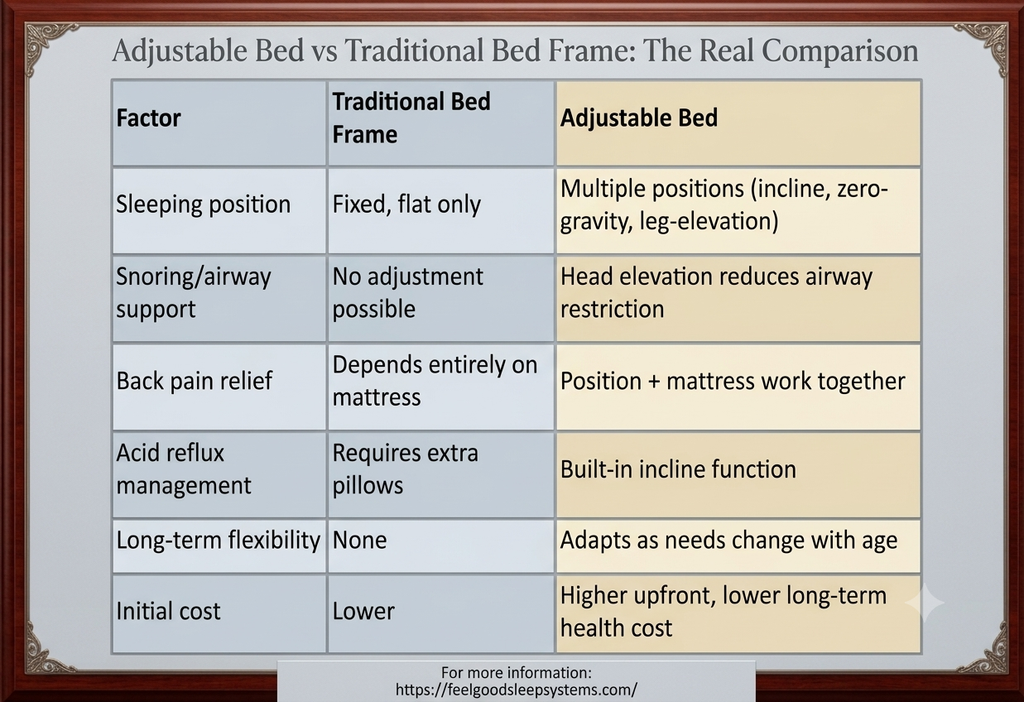
A traditional bed frame offers zero flexibility. Your spine, neck, and airway stay in the same fixed position all night, regardless of whether that position is helping or hurting you. An adjustable bed, by contrast, lets you change your incline, elevate your legs, or find a zero-gravity position, adapting the bed to your body instead of forcing your body to adapt to the bed.
This single difference is why adjustable beds are gaining ground so quickly.
Why Are People Switching to Adjustable Beds?
1. Snoring and Sleep Apnea Management
This is the single biggest driver of adjustable bed adoption. When you lie completely flat, gravity pulls the tongue and soft tissue toward the back of the throat, narrowing the airway. This is a major contributor to snoring and can worsen obstructive sleep apnea symptoms.
A recliner bed with head elevation opens up the airway naturally, reducing the vibration that causes snoring and easing the breathing effort for people with mild to moderate apnea. It’s not a replacement for a CPAP machine or a doctor’s treatment plan — but it is a scientifically sound complementary habit that many sleep specialists now recommend.
2. Back Pain and Spinal Alignment
Traditional flat frames offer no support customisation. If you have lower back pain, herniated discs, or general spinal strain, an adjustable bed lets you elevate your knees slightly while raising your upper body, a position that takes pressure off the lumbar spine that a flat mattress simply cannot replicate.
3. Circulation and Swelling
Elevating the legs above heart level for even part of the night can improve circulation and reduce swelling in the feet and ankles — a common request from people with desk jobs, long commutes, or age-related circulation issues.
4. Acid Reflux and Digestion
Lying flat right after dinner is a well-known trigger for acid reflux. An adjustable bed’s incline function keeps the stomach lower than the oesophagus, reducing nighttime reflux episodes without needing extra pillows stacked at an awkward angle.
5. Lifestyle Convenience
Beyond health, adjustable beds have simply become more comfortable for everyday living — reading, watching TV, working on a laptop, or enjoying massage functions, all from the same bed you sleep in.
Will Adjustable Beds Fully Replace Traditional Frames?
Not entirely — and probably not soon. Traditional bed frames will always have a place for people who sleep well flat, prioritise minimalist aesthetics, or work within tighter budgets. But the trend line is unmistakable: as more people learn that their nightly snoring, backache, or restless sleep isn’t “just how it is” but a fixable positioning problem, adjustable beds are moving from a niche product into a standard sleep-health investment.
The same shift happened with memory foam mattresses in the early 2000s — once seen as a premium novelty, now considered a baseline expectation. Adjustable beds appear to be on the same trajectory, driven not by marketing but by a simple, provable link between sleep position and sleep quality.
Disclaimer: The recliner adjustable bed is a wellness lifestyle product, and benefits for snoring or sleep apnea are based on user feedback and may vary from person to person; this content is for general sleep-awareness purposes only, and readers are advised to consult their doctor for any medical concerns.
Frequently Asked Questions
Q1: Does an adjustable bed help with sleep apnea?
A: An adjustable bed can help reduce mild sleep apnea and snoring symptoms by elevating the head and opening the airway, but it should complement — not replace — a doctor-prescribed treatment plan such as CPAP therapy.
Q2: Is a recliner bed the same as an adjustable bed?
A: Yes, in most markets “recliner bed” and “adjustable bed” refer to the same product — a bed frame with a motorized base that lets you change your head, back, and leg positions independently.
Q3: Do adjustable beds work with any mattress?
A: Most adjustable beds work best with flexible mattress types like latex or memory foam, which can bend with the base. Rigid innerspring mattresses may not flex properly with incline positions.
Q4: Are adjustable beds worth the investment?
A: For people dealing with snoring, back pain, acid reflux, or poor circulation, most sleep specialists consider adjustable beds a worthwhile long-term investment, since the health benefits compound over years of improved sleep quality.
Q5: Can an adjustable bed reduce snoring immediately?
A: Many users notice reduced snoring on the very first night simply by elevating the head 15–30 degrees, since this immediately opens the airway compared to lying completely flat.
Looking to experience the difference for yourself? Explore Feelgood Sleep Systems‘ range of adjustable recliner beds designed for better sleep, better breathing, and better mornings.